
Introduction
Mining and metallurgy industries involve some of the most demanding material handling conditions in the world. From transporting iron ore, coal, and mineral aggregates to handling steel products and high-temperature materials, equipment must operate continuously under heavy loads, strong impacts, abrasive particles, and extreme environments.
Among various material handling components, industrial conveyor chains play a critical role in ensuring efficient and reliable transportation. Designed specifically for heavy-duty applications, mining and metallurgical chains provide high strength, excellent wear resistance, and long service life, helping companies reduce downtime and improve production efficiency.
The Importance of Conveyor Chains in Mining and Metallurgy
Mining operations require the movement of large quantities of bulk materials, including coal, ores, stones, and processed minerals. Unlike standard industrial environments, mining sites often involve dust, moisture, impact loads, and uneven operating conditions.
Conveyor chains are essential components in:
Underground mining conveyors
Coal transportation systems
Ore handling equipment
Crushing and screening systems
Mineral processing plants
Metallurgical production lines
These chains are designed to withstand continuous operation while maintaining stable performance under heavy mechanical stress. In mining applications, chain failure can result in significant production losses, making durability and reliability key selection factors.
Mining Chains: Built for Extreme Working Conditions
Mining chains are engineered specifically for transporting heavy bulk materials. Compared with ordinary conveyor chains, mining chains feature stronger structures, improved fatigue resistance, and enhanced protection against wear.
High Load Capacity
Mining equipment often handles thousands of tons of materials daily. Therefore, conveyor chains must have excellent tensile strength and impact resistance to support heavy loads without deformation or breakage.
High-strength alloy steel is commonly used in mining chain manufacturing. Through heat treatment processes, the chains achieve improved hardness, toughness, and resistance to mechanical stress.
Excellent Wear Resistance
Mining environments contain abrasive materials such as rocks, sand, and metal particles. Continuous friction can quickly damage ordinary chains.
Heavy-duty mining chains are designed with:
Wear-resistant materials
Hardened chain components
Precision manufacturing processes
Improved surface treatment technologies
These features extend service life and reduce maintenance frequency.
Strong Impact Resistance
During ore transportation and crushing operations, chains may experience sudden impacts caused by large material loads. Mining chains are designed to absorb impact forces while maintaining structural stability.
Coal Conveyor Chains: Ensuring Efficient Coal Transportation
Coal remains an important energy resource worldwide, and efficient transportation systems are essential for coal mining and processing.
Coal conveyor chains are widely used in:
Coal mines
Coal washing plants
Power plant fuel handling systems
Bulk material conveyors
These chains must handle heavy loads and abrasive coal particles while operating continuously.
In coal washing plants, conveyor chains transport coal through cleaning and separation processes. They require excellent corrosion resistance, wear resistance, and operational stability to maintain uninterrupted production.
Metallurgical Industry Chains for High-Temperature Applications
The metallurgical industry presents additional challenges due to high temperatures, heavy materials, and demanding production environments.
Conveyor chains used in steel plants and metal processing facilities are designed for:
High-temperature resistance
Heavy-load transportation
Long-term continuous operation
Improved wear performance
Typical applications include:
Steel slab transportation
Sintering plants
Casting production lines
Scrap metal handling
Furnace feeding systems
Special engineering chains used in steel plants provide reliable operation under high-temperature and high-impact conditions.
Key Features of High-Performance Mining and Metallurgy Chains
1. High-Quality Alloy Steel Construction
Material selection directly affects chain performance. Premium alloy steel provides better tensile strength, fatigue resistance, and wear protection compared with conventional steel.
Advanced heat treatment improves:
Surface hardness
Internal toughness
Load-bearing capacity
Service life
2. Precision Manufacturing
Heavy-duty chains require strict manufacturing control to ensure accurate dimensions and smooth operation.
Important production processes include:
Precision forging
Welding technology
Heat treatment
Surface finishing
Quality inspection
High manufacturing accuracy helps reduce vibration, noise, and uneven wear during operation.
3. Customized Chain Solutions
Different mining and metallurgy applications have different requirements. Conveyor chains can be customized according to:
Conveyor structure
Material weight
Operating temperature
Speed requirements
Environmental conditions
Customized solutions ensure better compatibility between the chain and the complete conveying system.
How to Select the Right Mining Conveyor Chain?
Choosing the correct chain is essential for improving equipment reliability. Several factors should be considered:
Material Type
Different materials create different levels of abrasion. Coal, iron ore, limestone, and steel products require different chain designs.
Working Environment
Factors such as moisture, temperature, dust, and chemical exposure affect chain performance.
Load Requirements
Heavy-duty applications require chains with sufficient tensile strength and fatigue resistance.
Maintenance Requirements
Chains with better wear resistance and longer service life can reduce downtime and operating costs.
Benefits of Using High-Performance Industrial Chains
Investing in quality mining and metallurgy chains provides several advantages:
Reduced Downtime
Reliable chains minimize unexpected failures and improve production continuity.
Lower Maintenance Costs
Wear-resistant materials and advanced manufacturing reduce replacement frequency.
Improved Operational Efficiency
Smooth chain operation improves material transportation efficiency and overall equipment performance.
Longer Equipment Life
High-quality chains reduce stress on conveyor components, extending the lifespan of the entire system.
Conclusion
Mining and metallurgy industries require conveyor chains capable of handling extreme conditions, heavy loads, and continuous operation. Heavy-duty mining chains, coal conveyor chains, and metallurgical conveyor chains provide reliable solutions for transporting bulk materials efficiently.
By using high-strength materials, advanced manufacturing technologies, and application-specific designs, modern industrial chains deliver improved durability, safety, and productivity.
As mining and metal processing industries continue to pursue higher efficiency and automation, high-performance conveyor chain solutions will remain a key component in building reliable and sustainable material handling systems.
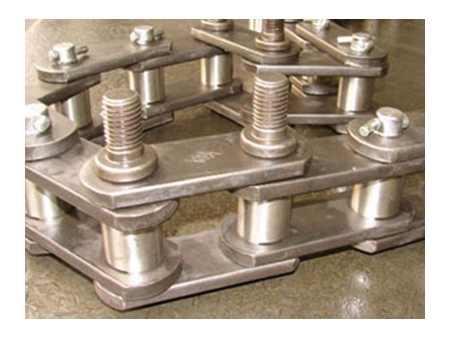
GIDI CHAIN LIMITED supplies roller chain, conveyor chain, Leaf Chain, welded chain, forged chain, Palm Oil Mill Chain, Hoisting Chain, Mine and Metallurgy Chain, etc., totaling over 3000 varieties. and 90% of chains are exported worldwide, mainly to Southeast Asia, Europe, North America, and South America. Chains are welcomed by customers for their excellent quality. Our company owns more than 100 sets of advanced and professional manufacturing equipment. A Perfect and rigorous QC system is implemented in every process from material purchasing to finished product packaging. Also, we have passed the ISO9001:2015 Quality Management System Certification.
More Detail: www.gidi-chain.com