
Heavy-duty engineering chains are essential in industrial machinery, conveyors, and lifting systems. Their performance depends on design, material quality, heat treatment, and accurate load capacity calculations. Understanding high-strength materials, engineering standards, and heat-treated processes ensures safety, durability, and efficiency in demanding environments.
This guide outlines chain manufacturing, the role of ductile core materials, induction hardening, working load limits, and the differences between Grade 80, 100, and 120 chains.
Chain Design
Mining conveyor chains are far more robust than standard chains. They feature larger, thicker links and are typically made from high-strength alloy steel to handle heavy loads, high speeds, and harsh conditions.
Chain Strength
Designed for extreme loads, mining chains resist breaking and stretching. This ensures stability, prevents sagging, and maintains consistent performance in coal handling systems.
Wear Resistance
Abrasive materials like coal and rock accelerate wear. Mining chains use wear-resistant materials (e.g., alloy or manganese steel) and heat treatment to extend service life.
Lubrication
Dusty environments can degrade lubrication quickly. High-performance oils, greases, and sealed designs help reduce friction and protect against contamination.
Maintenance
Regular inspection, lubrication, tension adjustment, and timely replacement of worn parts are essential to maintain reliability and prevent downtime.
Key Engineering Requirements
Wear Resistance: Heat-treated alloy steel, hardened pins/bushings, and large contact areas
Shock Load Capacity: Thick plates, larger pitch, high safety factors (>8:1)
Corrosion Resistance: Protective coatings, special alloys, sealed or self-lubricating components
Minimal Elongation: Precision heat treatment, pre-stretching, and wear-resistant bushings
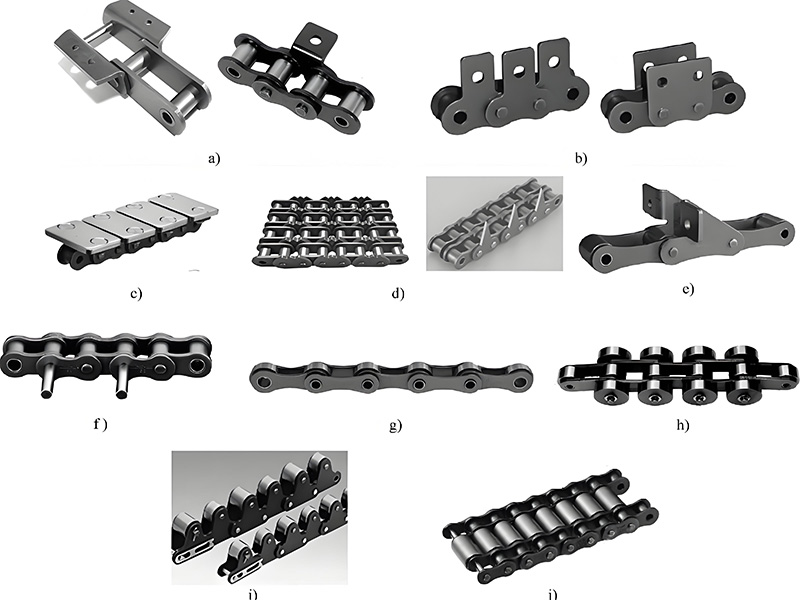
1. Chain Design for Heavy-Duty Applications
Reliable performance starts with proper design. Key factors include load distribution, wear resistance, material selection (e.g., alloy steel), and engineering class standards. The goal is to meet operational demands while reducing wear and downtime.
2. Materials Used in Heavy-Duty Chains
High-performance chains typically feature:
Ductile core: Improves toughness and resists shock loads
Alloy steel: Provides high strength, wear resistance, and fatigue durability
Engineered components: Optimized for strength and long service life
3. Heat Treatment and Hardening
Heat treatment enhances strength and wear resistance:
Induction hardening: Hard surface with a tough core
Grade-specific treatment: (Grade 80/100/120) ensures proper load capacity
Heat-treated chains: Deliver better durability in demanding applications
4. Chain Grades
Grade 80: Durable, heat-treated; used in lifting and conveyors
Grade 100: Higher strength and wear resistance; mining and construction
Grade 120: Maximum strength for critical heavy-duty applications
Selecting the correct grade ensures safety and performance.
5. Load Capacity & Working Load Limits
Key considerations include working load limits (WLL), dynamic vs. static loads, shock impact, and wear allowance. Proper calculation ensures safe, long-term operation.
6. Advantages of Heavy-Duty Engineering Chains
High strength for extreme loads
Excellent wear resistance
Improved safety and reliability
Long fatigue life
Versatile for lifting, conveying, and industrial use
FAQs
What type of chain is used in coal feeder systems?
Engineering steel chains such as roller chains, drag conveyor chains, or apron feeder chains are commonly used, depending on the feeder design.
Are feeder chains the same as standard roller chains?
No. While based on roller chain principles, feeder chains are reinforced for low speed, heavy loads, and abrasive conditions.
How long do coal feeder chains last?
Typically 2–6 years, depending on load, maintenance, coal abrasiveness, and operating hours.
Why do feeder chains elongate over time?
Elongation is mainly caused by wear between pins and bushings—not actual metal stretching.
Can standard ANSI roller chains be used in feeders?
Generally no. Standard chains are not designed to handle high shock loads, abrasive dust, or continuous heavy-duty operation.
What is the main cause of chain failure in coal plants?
Common causes include abrasive wear, poor lubrication, misalignment, and overloading.
Conclusion
Coal feeder chains are not standard roller chains—they are heavy-duty engineering conveyor chains built for some of the toughest industrial conditions.
Choosing the right chain, along with proper maintenance, directly affects power plant reliability, operational safety, and long-term costs. Though small in size, feeder chains play a critical role in overall system performance.
GIDI CHAIN LIMITED supplies roller chain, conveyor chain, Leaf Chain, welded chain, forged chain, Palm Oil Mill Chain, Hoisting Chain, Mine and Metallurgy Chain, etc., totaling over 3000 varieties. and 90% of chains are exported worldwide, mainly to Southeast Asia, Europe, North America, and South America. Chains are welcomed by customers for their excellent quality. Our company owns more than 100 sets of advanced and professional manufacturing equipment. A Perfect and rigorous QC system is implemented in every process from material purchasing to finished product packaging. Also, we have passed the ISO9001:2015 Quality Management System Certification.
More Detail: www.gidi-chain.com