
Walk into any modern palm oil mill, and you will see conveyor chains in constant motion — moving fresh fruit bunches, nuts, and fibers through every stage of production. From reception and sterilization to threshing, pressing, and oil clarification, palm oil conveyor chains serve as the silent backbone of 24/7 continuous operation.
These specialized chains directly impact mill efficiency, product quality, and operating costs. Poor chain selection or low-quality products often result in frequent breakdowns, high maintenance, and costly downtime.
This guide covers what palm oil conveyor chains are, their critical role in the milling process, and why choosing the right chain is essential for reliable and profitable palm oil production.
KEY TAKEAWAYS
Palm oil conveyor chains are heavy-duty systems built to withstand extreme mill conditions: high steam temperatures (up to 145°C), acidic environments, and heavy loads from fresh fruit bunches.
Different stages require specialized chains, including scraper chains for FFB transport, sterilizer cage chains, under-thresher chains, and digester/press feeding chains.
Common specifications include 4” and 6” pitch chains with hollow or solid pins, straight/offset sidebars, and various attachments for scrapers, trays, and cages.
Chains are engineered with corrosion and wear-resistant materials such as chrome-plated pins, carburized bushings, and alloy or stainless steel components.
A typical 60-ton/hour mill operates 15–25 chain systems simultaneously, making chain reliability essential for continuous production.
Proper selection, lubrication, and maintenance can extend chain service life from 12–18 months to 36–48 months.
The Palm Oil Milling Process: Where Chains Fit In
Palm oil extraction is a continuous mechanical process that relies heavily on specialized conveyor chains to move materials through every stage — from fresh fruit bunch (FFB) reception to final pressing and by-product handling.
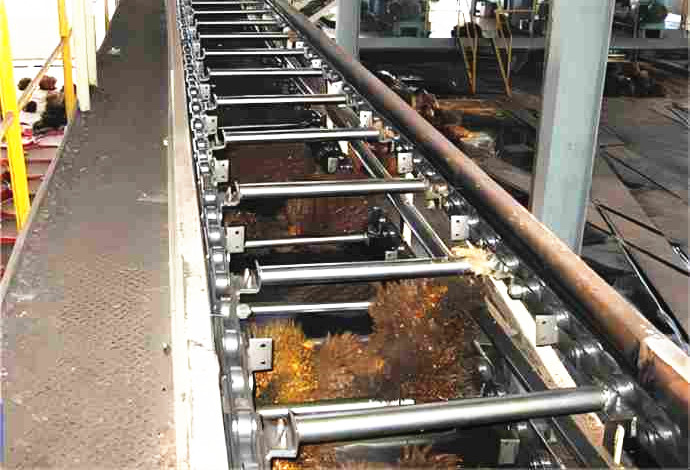
Stage 1: FFB Reception & TransportFresh fruit bunches (20–30 kg each) must be processed within 48 hours. Heavy-duty scraper conveyor chains transport them up ramps to sterilizers, handling abrasive soil, sand, and debris.
Stage 2: SterilizationFFB are steamed at 130–145°C to loosen fruit and deactivate enzymes. Heavy 6-inch pitch chains carry sterilizer cages through high-temperature, high-humidity, and corrosive steam conditions under heavy loads.
Stage 3: Threshing & SeparationAfter sterilization, under-thresher hollow pin chains (4" or 6") convey loose fruits away from empty bunches in a highly abrasive environment filled with fiber, sand, and debris at 80–100°C.
Stage 4: Digestion & PressingDigested fruits are fed into presses to extract crude palm oil. Conveyor chains transfer hot, sticky, and oily material between digesters, elevators, and presses.
Stage 5: Fiber & Empty Bunch HandlingEmpty fruit bunches (EFB) and press fiber are moved via long scraper conveyors to storage or boilers, operating under continuous abrasive wear.
Types of Chains Used in Palm Oil Mills
Palm oil mills use different chain types, each designed for specific production stages to ensure efficient and reliable material handling.
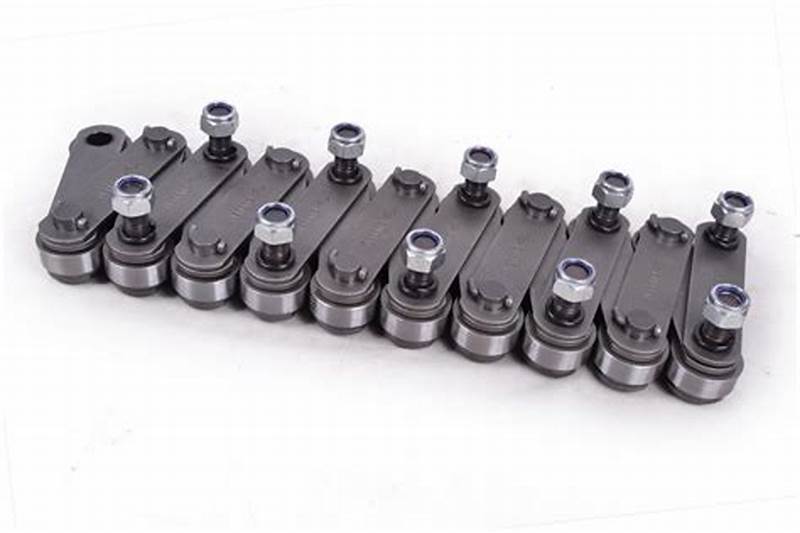
Hollow Pin Chain – 4" & 6" pitch; used in under-thresher conveyors, fruit elevators, and EFB handling. Features hollow pins for easy cross-rod and flight attachment, simplifying maintenance.
Straight Sidebar Chain – 4"–6" pitch; used for sterilizer cages and heavy FFB transport. Designed for high load capacity with hardened or chrome-plated pins for corrosion resistance.
Offset Sidebar Chain – 4" pitch; used in inclined scraper conveyors and fiber handling. Compact design with good wear distribution and smooth operation.
Welded Steel Chain – Custom pitch; used in heavy-duty or extreme environments. Eliminates pin joints for higher strength and improved durability.
Attachment Chains – Standard pitch with customized attachments for tray systems and special handling equipment, often made with corrosion-resistant materials.
The Role of Chains in Production Efficiency and Mill Throughput
A typical 60-ton-per-hour palm oil mill processes around 1,440 tons of fresh fruit bunches (FFB) per day. This output depends entirely on continuous material flow, which is driven by conveyor chains across every processing stage. If one chain system fails, the entire mill can stop—causing immediate production loss, product spoilage risks (within a 48-hour harvest window), emergency repair costs, and potential equipment damage.
Because of this, chain reliability is often considered more critical than boilers or presses. Mills prioritize long service life and predictable wear over low initial cost, as higher-quality chains significantly reduce costly downtime and replacement frequency.
Common Chain Failure Modes and Prevention
Corrosion-induced pin wear
Steam condensate causes pin corrosion, leading to wear and eventual failure. Prevention includes chrome-plated or stainless steel pins and routine elongation checks (replace at >3% elongation).Thermal elongation & misalignment
High sterilizer temperatures (up to 145°C) cause chain expansion, which can lead to slack, sprocket disengagement, or shock loading. Proper tensioning systems (spring or hydraulic take-ups) are essential.Attachment fatigue failure
Repeated impact loads can crack or loosen welded or bolted attachments. Regular inspection prevents sudden failure and material spillage.Lubrication loss
Steam washout removes lubrication, increasing metal wear. Mills must use high-temperature, water-resistant greases or rely on hardened surface treatments with scheduled maintenance.
Frequently Asked Questions (FAQs)
Q1: Palm oil chain vs standard conveyor chain?
Palm oil chains are designed for corrosion, high temperature (40–145°C), and heavy shock loads. Standard chains cannot withstand steam condensate and fail much faster.
Q2: How long do palm oil chains last?
Typically: sterilizer chains 36–48 months, under-thresher chains 18–24 months. Economy chains may last only 12–15 months.
Q3: Why do palm oil chains fail early?
Main reasons: corrosion, poor tensioning, lubrication washout, and insufficient wear resistance in abrasive areas.
Q4: 4-inch or 6-inch pitch?
6-inch pitch is used for heavy-duty sterilizer cages; 4-inch pitch is common for fruit and scraper conveyors. Selection depends on load and design.
Q5: Can chains be repaired?
Minor link replacement is possible if elongation is <3%. Beyond that, full replacement is more cost-effective.
Q6: What lubrication is recommended?
Use high-temperature, water-resistant grease (NLGI 2, >200°C). Sterilizer chains often run dry with wear-resistant treatments.
Q7: How to check chain wear?
Measure 10–20 pitches and compare to original length. Replace at 2–3% elongation.
Q8: Do I need stainless steel chains?
Not always. Chrome-plated and carburized steel is usually sufficient; stainless steel is used in highly corrosive or hard-to-maintain areas.
Q9: Why do chains disengage in sterilizers?
Thermal expansion causes slack. Proper spring or hydraulic tensioners prevent sprocket disengagement.
Q10: How to store spare chains?
Keep dry, indoors, lightly oiled, and away from floor moisture. Inspect and re-oil periodically.
GIDI CHAIN LIMITED supplies roller chain, conveyor chain, Leaf Chain, welded chain, forged chain, Palm Oil Mill Chain, Hoisting Chain, Mine and Metallurgy Chain, etc., totaling over 3000 varieties. and 90% of chains are exported worldwide, mainly to Southeast Asia, Europe, North America, and South America. Chains are welcomed by customers for their excellent quality. Our company owns more than 100 sets of advanced and professional manufacturing equipment. A Perfect and rigorous QC system is implemented in every process from material purchasing to finished product packaging. Also, we have passed the ISO9001:2015 Quality Management System Certification.
More Detail: www.gidi-chain.com