
An escalator step chain is one of the key mechanical components in an escalator system. It connects and synchronizes the individual steps, allowing them to move continuously along the escalator track at a consistent speed and spacing. Because escalators operate continuously under heavy passenger loads, step chains must provide high strength, wear resistance, dimensional accuracy, and long-term reliability. 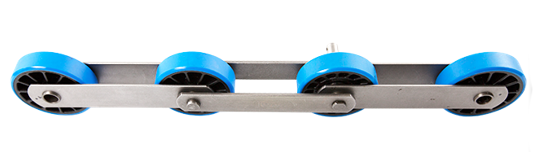
What Is an Escalator Step Chain?
An escalator step chain is a continuous loop of mechanical chain that drives and supports the escalator steps. It runs around sprockets at the upper and lower ends of the escalator and guides the steps through their complete travel path.
Special step attachments connect the chain to the escalator steps. As the chain moves, these attachments transfer the chain's motion to the steps, keeping them synchronized throughout the escalator's operation.
The step chain must withstand:
Continuous tensile loads
Passenger weight and changing loads
Repeated articulation
Friction and vibration
High operating frequency
Long periods of continuous operation
A properly designed step chain helps ensure smooth passenger movement and reliable escalator operation.
How Does an Escalator Step Chain Work?
The working principle is relatively straightforward:
Drive sprocket rotation – The escalator motor and drive system rotate the main sprocket.
Chain movement – The sprocket engages with the step chain and pulls it through the escalator's track system.
Step movement – Step attachments transfer the chain's movement to the individual steps.
Guided circulation – Rollers and guide tracks control the chain and step path.
Return movement – After reaching the upper or lower landing, the chain travels around the return sprocket and carries the steps back through the return section.
This continuous loop allows the steps to maintain consistent spacing and synchronized movement.
Main Components of an Escalator Step Chain
An escalator step chain consists of several precision-engineered components that work together.
1. Chain Links
Chain links form the main structural body of the chain. They are generally manufactured from high-strength steel to withstand repeated tensile loading and provide the required strength and durability.
2. Pins and Bushings
Pins and bushings connect the chain links and allow them to articulate as the chain travels around the sprockets.
These components are subject to continuous friction, so appropriate material selection, heat treatment, and lubrication are important for reducing wear and extending service life.
3. Rollers
Rollers help the chain move smoothly along the guide tracks. They reduce friction between the moving chain assembly and the track system.
Depending on the design, rollers may be manufactured from steel, nylon, or other wear-resistant materials.
4. Step Attachments
Step attachments connect the escalator steps to the chain. Their position and dimensional accuracy are important for maintaining consistent step spacing and synchronized movement.
5. Sprockets
Sprockets engage with the chain and transfer rotational power to the step chain. Proper sprocket alignment and tooth condition are essential for smooth operation and minimizing abnormal wear.
6. Guide Tracks
Guide tracks control the movement of the chain and steps throughout the escalator structure. They help maintain alignment and ensure that the chain follows the correct path.
Materials Used in Escalator Step Chains
High-strength steel is commonly used for the main chain components because it provides the tensile strength and durability required for heavy-duty applications.
Different components may use different materials or treatments:
| Component | Typical Material / Treatment | Main Requirement |
|---|---|---|
| Chain links | High-strength steel | Strength and fatigue resistance |
| Pins | Hardened steel | Wear resistance |
| Bushings | Hardened steel | Low wear and durability |
| Sprockets | High-strength or hardened steel | Load capacity and wear resistance |
| Rollers | Steel or nylon | Low friction and wear resistance |
Heat treatment and surface treatment can further improve hardness, wear resistance, and corrosion resistance.
Benefits of a High-Quality Escalator Step Chain
Smooth and Synchronized Movement
A properly manufactured step chain keeps the escalator steps moving at a consistent speed and spacing, reducing vibration and uneven movement.
High Load Capacity
Escalators in shopping malls, airports, metro stations, and other public facilities may operate continuously with large and constantly changing passenger loads. Step chains therefore need sufficient strength and fatigue resistance.
Long Service Life
High-quality materials, accurate manufacturing, appropriate heat treatment, and proper lubrication can reduce wear and extend chain service life.
Improved Safety
The step chain is directly involved in step movement. Reliable chain performance helps prevent problems such as abnormal step movement, misalignment, excessive vibration, and chain failure. Regular inspection and maintenance are therefore essential.
Applications of Escalator Step Chains
Escalator step chains are widely used in:
Shopping malls and retail centers
Airports
Metro and railway stations
Office buildings
Hotels and commercial buildings
Public transportation facilities
High-traffic environments place particularly demanding requirements on chain strength, wear resistance, and maintenance.
Escalator Step Chain Maintenance
Regular maintenance is important because the chain is exposed to continuous mechanical stress and friction.
Key maintenance activities include:
Checking chain links for cracks or deformation
Inspecting pins and bushings for wear
Checking roller condition and rotation
Inspecting sprocket teeth for abnormal wear
Checking chain tension and alignment
Removing dirt and debris from guide tracks
Applying appropriate chain lubricant
Monitoring chain elongation and pitch changes
Chain elongation is an important indicator of wear. Excessive wear can affect step alignment and the engagement between the chain and sprockets, potentially leading to abnormal operation.
The actual inspection and replacement interval should follow the escalator manufacturer's maintenance instructions and applicable local safety standards, rather than relying on one universal interval.
Common Causes of Escalator Step Chain Wear
Several factors can shorten the service life of a step chain:
Frequent operation and high passenger traffic
Insufficient or incorrect lubrication
Contamination by dust, dirt, or abrasive particles
Improper chain tension
Sprocket misalignment
Worn pins, bushings, or rollers
Excessive vibration
Moisture and corrosive environments
Poor installation or maintenance
Identifying these problems early can help prevent costly downtime and major component damage.
How to Choose an Escalator Step Chain
When selecting a replacement or custom escalator step chain, consider:
Escalator manufacturer and model
Chain pitch and dimensions
Step attachment configuration
Operating load and passenger traffic
Chain material and heat treatment
Roller specifications
Sprocket compatibility
Lubrication requirements
Operating environment
Required service life and maintenance conditions
Accurate dimensional matching is particularly important when replacing an existing chain. The chain, step attachments, rollers, sprockets, and guide system must work together correctly.
Conclusion
The escalator step chain is a critical component responsible for connecting, driving, and synchronizing escalator steps. Its performance directly affects the smoothness, reliability, efficiency, and safety of the entire escalator system.
High-strength materials, precision manufacturing, proper heat treatment, accurate assembly, and regular maintenance all contribute to longer service life. For demanding applications such as airports, metro stations, and other high-traffic facilities, selecting a durable step chain designed for the specific escalator system is especially important
GIDI CHAIN LIMITED supplies roller chain, conveyor chain, Leaf Chain, welded chain, forged chain, Palm Oil Mill Chain, Hoisting Chain, Mine and Metallurgy Chain, etc., totaling over 3000 varieties. and 90% of chains are exported worldwide, mainly to Southeast Asia, Europe, North America, and South America. Chains are welcomed by customers for their excellent quality. Our company owns more than 100 sets of advanced and professional manufacturing equipment. A Perfect and rigorous QC system is implemented in every process from material purchasing to finished product packaging. Also, we have passed the ISO9001:2015 Quality Management System Certification.
More Detail: www.gidi-chain.com